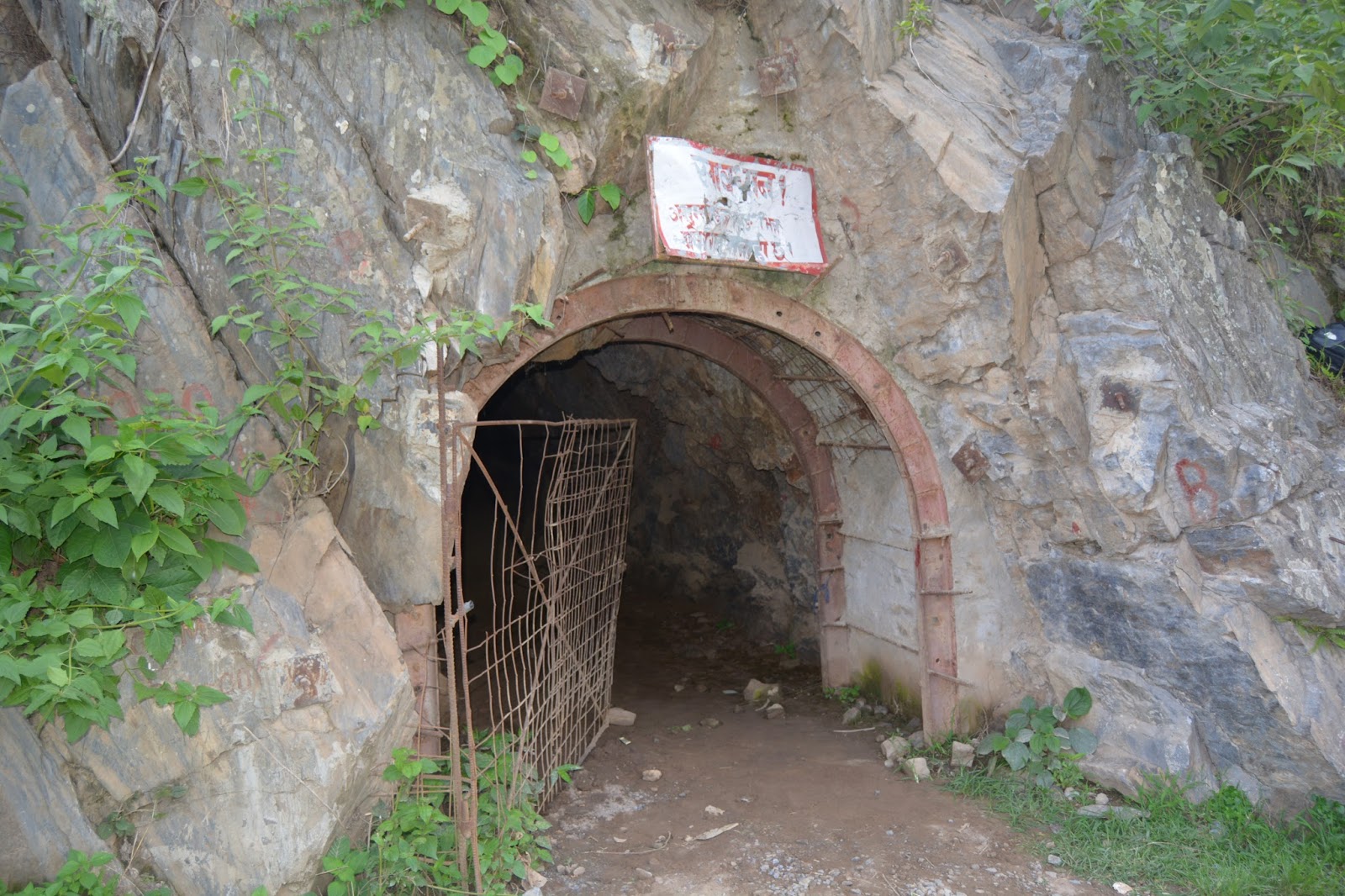
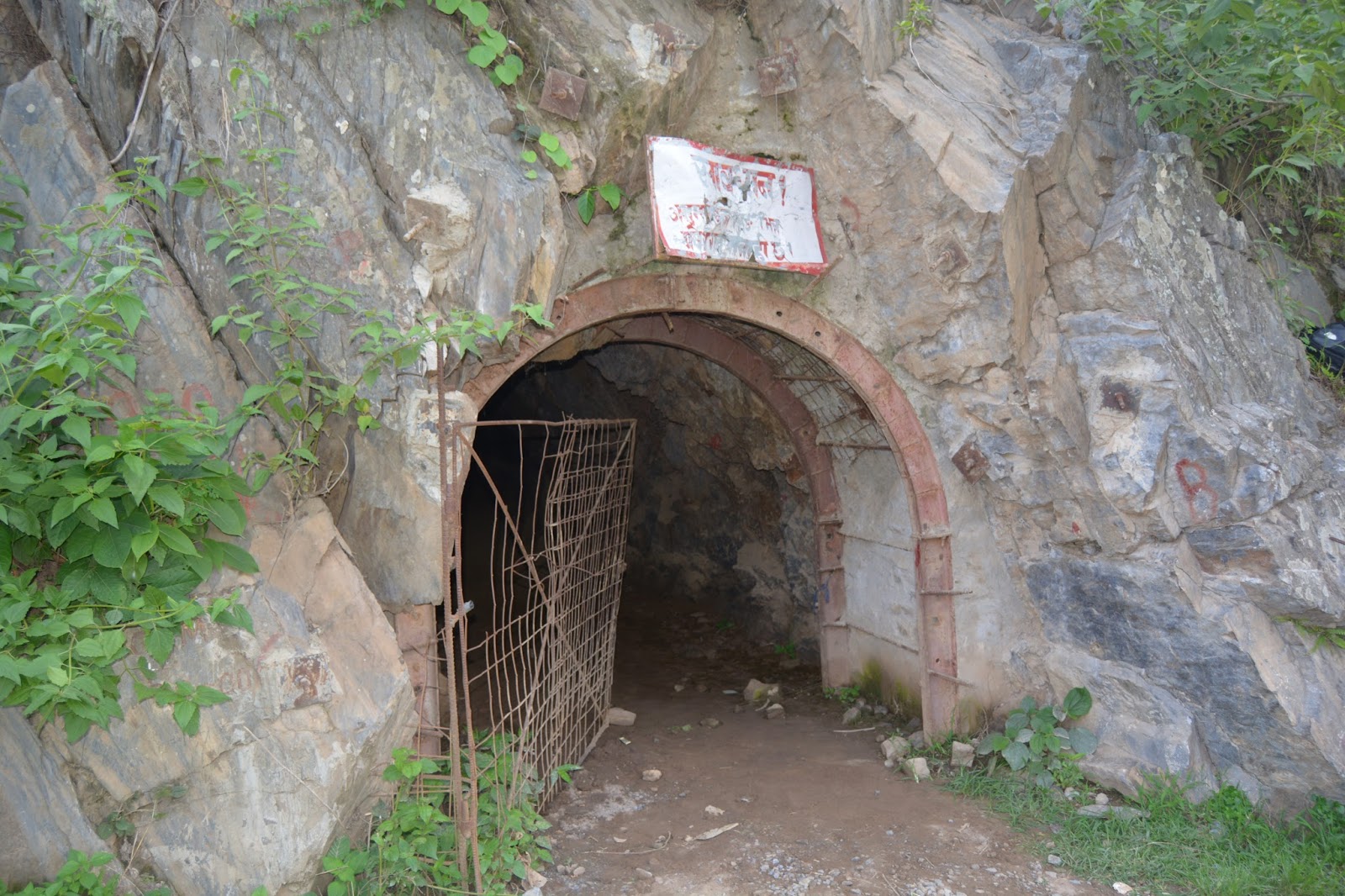
Fig:Tunnel constructed for Budhigandaki hydropower Project
Tunnel is a civil engineering structure. A tunnel is an underground or underwater passageway, dug through the surrounding soil/earth/rock and enclosed except for entrance and exit, commonly at each end. A tunnel may be for foot or vehicular road traffic, for rail traffic, or for a canal. Some tunnels are aqueducts to supply water for consumption or for hydroelectric stations or are sewers. Utility tunnels are used for routing steam, chilled water, electrical power or telecommunication cables, as well as connecting buildings for convenient passage of people and equipment.
A major tunnel project must start with a comprehensive investigation of ground/rock conditions by collecting samples from boreholes and by other geophysical techniques. Tunnels are dug in types of materials varying from soft clay to hard rock. The method of tunnel construction depends on such factors as the rock mass classification, the ground water conditions, the length and diameter of the tunnel drive, the depth of the tunnel, the logistics of supporting the tunnel excavation, the final use and shape of the tunnel and appropriate risk management.
The proposed tunnel’s location will determine what tools and techniques are necessary to construct it and prepare it for its intended use. Tunnels can be divided into 4 types:
Soft-ground tunnels. These tunnels require support at the openings to keep the tunnel from collapsing. These tunnels are usually shallow and used for subways, water delivery, and wastewater removal systems.
Rock tunnels. Because they are excavated from solid rock, these tunnels require little added support or none at all. Train and car tunnels are usually of this variety.
Underwater tunnels. As the name indicates, these tunnels go under rivers, lakes, canals, and in the case of the “Chunnel,” straits such as the English Channel. These are the hardest tunnels to build, as water has to be kept away from the tunnel during and after construction.
Building a tunnel under a city offers problems similar to an underwater tunnel, in that the ground around the tunnel tends to sag under the weight of the buildings above it. A knowledge of the area’s geology helps predict how much the ground will sag and suggests what methods can minimize the sagging.
Tunnel Construction:
For the construction of Tunnel following steps are followed/proceeded:
Procedure:
Geological Surveying/mapping: For the construction of tunnel, the geological surveying is done firstly to select the site. A geological survey is the systematic investigation of the geology/area to determine the character, relations, distribution, and origin or mode of formation of its rock masses and mineral resources beneath a given piece of ground for the purpose of creating a geological map or model. Numerous surveying techniques are used for geological surveys like laboratory test results, and modeling approaches to understand the characteristics of the earth. In the usual geological surveying, the primary information is concerning the study of rocks, their location, and the deformation and examination of the sedimentary layers. In addition, the soils, landscapes, rivers, and glaciers are examined. Generally surveying task includes:
Geological mapping
Structural mapping to indicate the location of the main rocks and the faults due to which they were placed there
Surficial mapping for the location of soils
Survey of topographic features
Formation of topographic maps
Survey to identify changes in landscapes, erosion patterns, and river channels
Subsurface mapping by seismic surveys, ground penetrating radar, and electrical tomography
Field Selection: After the geological surveying, the site for tunneling is selected. Selection of site is very important because it directly related to our project place and nearby village or city. We have to select the site which will be economic, effective and safe. Studies can initially be based on desk studies of the factors that decide the feasibility of the project. This goes for topics as topography, bathymetry, soil conditions/geology and nature.
Manual/Machining (TBM) Drilling: Drilling is a process of digging the earth surface making small whole for charging the explosion. The drilling can be done by means of machine or manual.
TMB is used as an alternative to drilling and blasting (D&B) methods. TBMs are used to excavate tunnels with a circular cross section through a variety of subterranean matter; hard rock, sand or almost anything in between. As the TBM moves forward, the round cutter heads cut into the tunnel face and splits off large chunks of rock. The cutter head scarves a smooth round hole through the rock — the exact shape of a tunnel. Conveyor belts carry the rock shavings through the TBM and out the back of the machine to a dumpster.
Charging/keeping blasting material: For the construction of tunnel we have to muck the rocks from the site alignment. For this purpose, we can use blasting materials. This helps us to muck the rock pieces easily.
Blasting-mucking: The charged blasting material is exploded. Then the rock will be exploded into small particles. The process of removing of the exploded rock pieces form the tunnel is known as mucking.
Hard rock tunneling and utilizes rock bolts and shotcrete applied immediately after blasting. This is often followed by a cast in-situ concrete lining using formwork.
Scaling ventilation: The process of removing remaining roof rocks which may be fall.
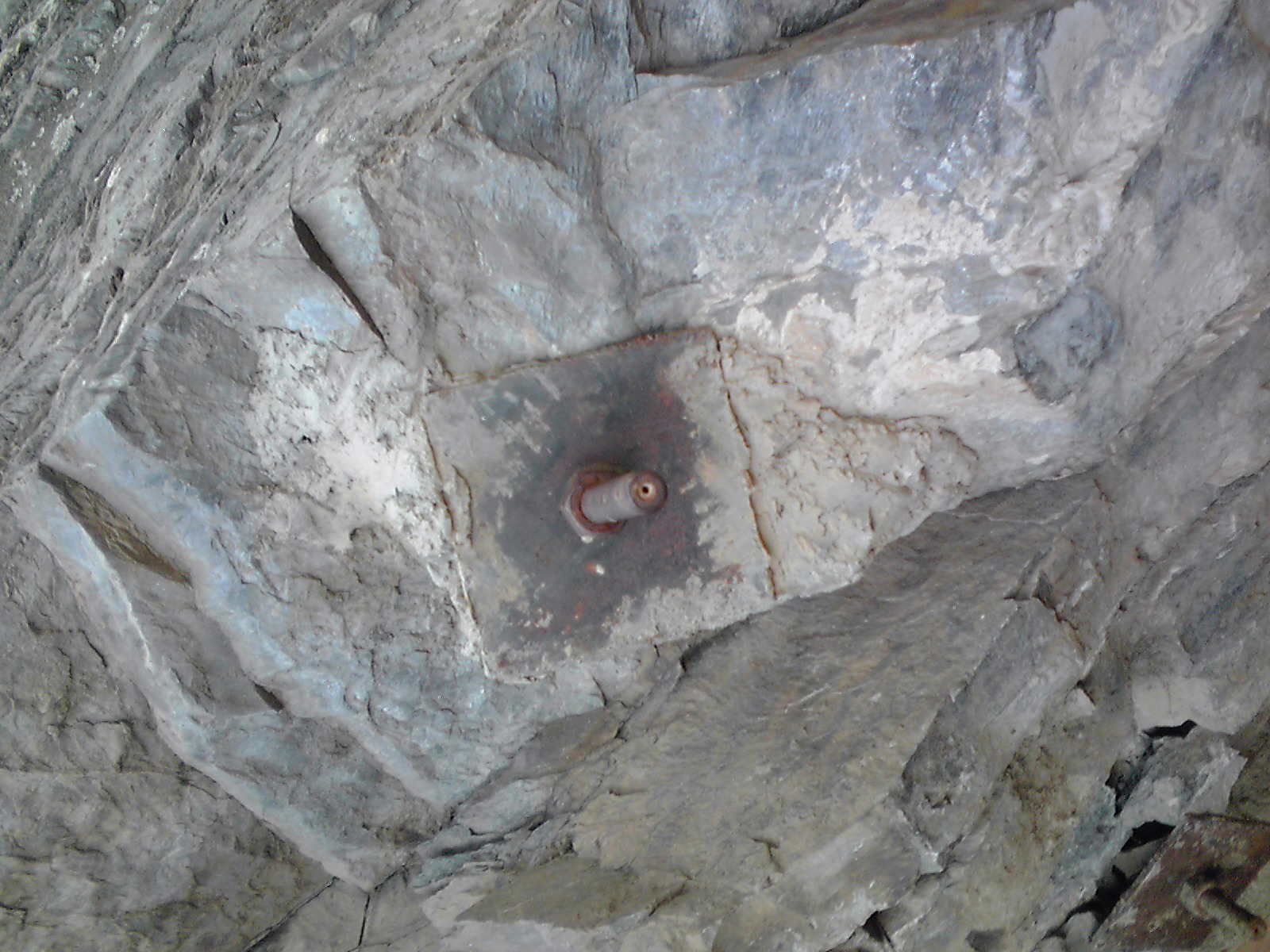
Rock Bolting
figure showing steel rib
Support system: In the site of the tunnel construction, we have to determine that the rock property for the support system.
Steel Rib
Rock Bolting
Wire Mesh
Wire Mesh
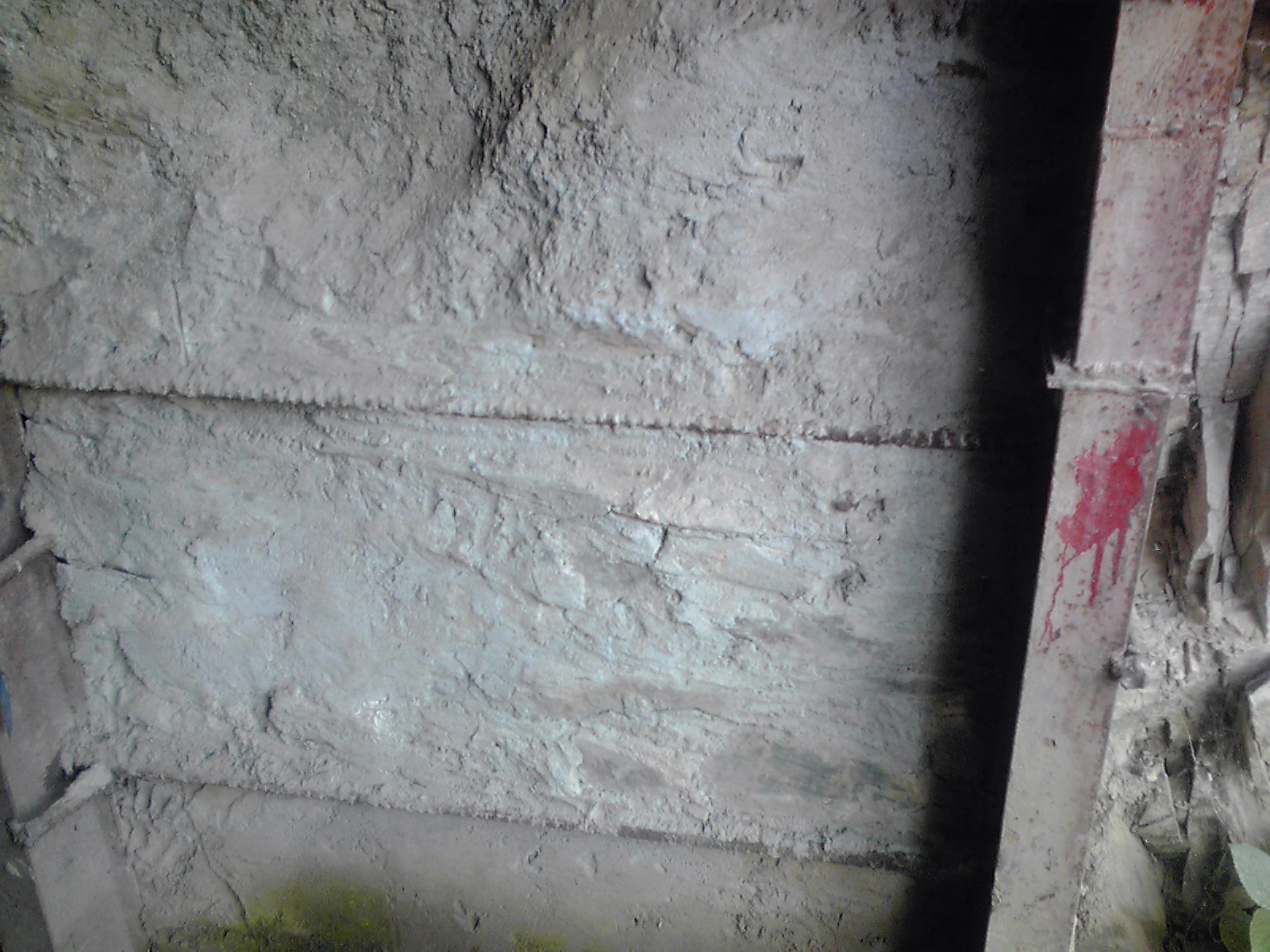
Shotcrete
Shotcrete
Purpose of Tunnel:
Tunnel is constructed for the following purposes:
Tunnel is mainly used for drinking water supply, irrigation, transportation, hydropower production, mining, etc.
Tunnel makes route short and safe.
For the railway tunnel is very important.
Easy passage
Military purpose
For the study of intrusive rock types.
It connects two places in short distance which helps to reduce the transportation costs and saves the time.
For the initial study of any sites for different projects, the tunnel is constructed.